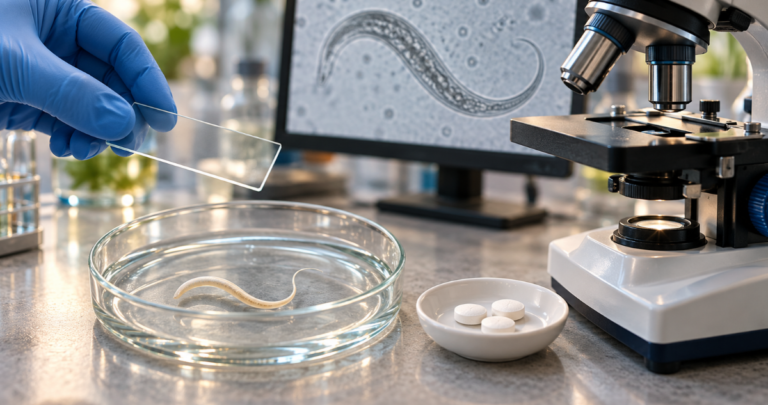


Ivermectin has been used in medicine for more than 40 years. It is mainly known for treating certain parasitic infections that affect the skin, intestines, and other parts of the body. Over the years, this medicine has helped millions of people, especially in areas where parasitic diseases are common.
Understanding ivermectin’s history and how it works can help people separate its proven medical benefits from claims that are still being studied.
What Is Ivermectin?
Ivermectin is an antiparasitic medicine used to treat certain infections caused by worms and other parasites. It belongs to a group of medicines called avermectins.
Parasites are small organisms that survive by living on or inside another organism. Some cause skin irritation, while others affect the digestive system, eyes, or other organs.
Ivermectin works by affecting the nerves and muscles of certain parasites, making it difficult for them to survive.
It is available in several forms, including oral tablets, creams, and lotions. Each form is intended for particular medical conditions.
In the United States, ivermectin tablets are approved for treating strongyloidiasis and onchocerciasis. Certain topical products are approved for conditions such as head lice and rosacea.
History of Ivermectin: How Was It Discovered?
The history of ivermectin began in the 1970s when scientists were searching for better treatments for parasitic diseases.
Japanese scientist Satoshi Ōmura was studying microorganisms found in soil. During his research, he discovered bacteria that produced substances with the potential to fight parasites.
His findings attracted the attention of researchers at Merck in the United States.
American scientist William C. Campbell and his team studied these substances and discovered that they were highly effective against several parasitic worms.
The compounds were called avermectins. Researchers later modified one of these compounds to develop ivermectin.
Initially, ivermectin was used in veterinary medicine to treat parasites in animals. Scientists then began studying its possible benefits for humans.
By the late 1980s, ivermectin had become an important medicine for treating river blindness. Its use later expanded to other parasitic infections.
In 2015, Satoshi Ōmura and William C. Campbell shared half of the Nobel Prize in Physiology or Medicine for their discoveries involving treatments for roundworm infections.
Their work helped improve the lives of millions of people affected by parasitic diseases.
How Does Ivermectin Work?
Ivermectin works by disrupting the normal nerve and muscle activity of certain parasites.
Parasites need their nerves and muscles to move, feed, and survive. Ivermectin attaches to specific channels in their nerve and muscle cells, known as glutamate-gated chloride channels.
This causes paralysis in susceptible parasites, making it easier for the body to eliminate them.
The medicine affects parasites differently from humans because these channels are not normally found in human cells.
However, ivermectin does not work against every parasite. Its effectiveness depends on the type of infection being treated.
It is also important to understand that ivermectin is not an antibiotic. It does not treat ordinary bacterial infections.
Medical Uses of Ivermectin
Ivermectin is used for several medical conditions, although some treatments are approved only in certain countries.
1. Strongyloidiasis
Strongyloidiasis is an intestinal infection caused by a roundworm called Strongyloides stercoralis.
People can become infected when parasite larvae in contaminated soil enter through the skin.
Some people experience stomach pain, diarrhea, or skin rashes, while others may have no noticeable symptoms.
Ivermectin is a first-line treatment for this infection. It helps eliminate the worms and reduce the risk of complications.
2. River Blindness (Onchocerciasis)
River blindness is a parasitic disease spread through bites from infected blackflies.
The infection can cause severe itching, skin problems, and damage to the eyes. In serious cases, it may lead to permanent vision loss.
Ivermectin reduces the number of young worms in the body and helps control the infection.
However, it does not reliably kill adult worms, so repeated treatment may be necessary.
3. Scabies
Scabies is a contagious skin condition caused by tiny mites that burrow into the skin.
It commonly causes intense itching, particularly at night, along with small bumps or rashes.
Doctors may prescribe oral ivermectin for scabies in certain situations, especially when topical treatments are unsuitable.
Oral ivermectin is not FDA-approved for scabies, but it is included in CDC treatment guidance.
4. Head Lice
Head lice are small insects that live on the scalp and spread mainly through close head-to-head contact.
They can cause itching and discomfort.
Topical ivermectin lotion is used to treat head lice by affecting their nervous system.
Patients should follow the product instructions carefully.
5. Rosacea
Rosacea is a long-term skin condition that often causes facial redness, bumps, and irritation.
Ivermectin 1% cream is approved to treat inflammatory lesions associated with rosacea.
It may help by reducing inflammation and affecting Demodex mites, which can contribute to symptoms in some people.
How Is Ivermectin Taken?
The correct ivermectin dosage depends on the infection, body weight, and individual health needs.
Oral tablets are commonly prescribed for certain worm infections. Some conditions require a short treatment course, while others need additional doses or follow-up examinations.
Topical products are applied directly to affected skin according to their instructions.
Patients should never increase their prescribed dose or repeat treatment without medical advice.
Taking more ivermectin does not necessarily improve treatment and may cause serious health problems.
Is Ivermectin Safe for Humans?
Ivermectin has a long history of medical use and is generally well tolerated when prescribed appropriately.
However, like other medicines, it can cause side effects.
Common Side Effects
Possible side effects include:
- Headache or dizziness
- Nausea and stomach discomfort
- Diarrhea
- Mild skin rash or itching
- Tiredness
These effects are often temporary, although their severity can vary.
Some reactions may also occur when the body responds to parasites affected by treatment.
Serious Side Effects
Rare but serious reactions can include confusion, difficulty walking, seizures, severe allergic reactions, or loss of consciousness.
Anyone experiencing these symptoms should seek urgent medical attention.
Taking excessive amounts can cause poisoning and serious neurological problems.
Important Safety Precautions
People who are pregnant, breastfeeding, taking other medicines, or managing existing health conditions should discuss ivermectin use with a healthcare professional.
Extra precautions may also be necessary for people with certain parasitic infections, including Loa loa.
Veterinary ivermectin products should never be used by humans. Their concentrations and formulations may differ from medicines intended for people.
Current Research on Ivermectin
Researchers continue to investigate ivermectin and its possible applications beyond established parasitic infections.
Malaria Prevention
Scientists are studying whether ivermectin could help reduce malaria transmission by affecting mosquitoes that feed on treated individuals.
This research focuses on reducing mosquito survival rather than directly treating malaria in patients.
More evidence is needed to determine its effectiveness and safety in public health programs.
Parasitic Disease Control
Researchers are also examining improved treatment schedules and combinations of medicines for controlling parasitic infections.
Drug resistance is another important concern, particularly because resistance has already developed in some parasites affecting animals.
Other Potential Medical Uses
Laboratory studies have explored ivermectin’s effects on inflammation, cancer cells, and certain viruses.
Although some findings are interesting, laboratory results are not proof that the medicine is effective for these conditions in humans.
Further clinical trials are necessary before new medical uses can be recommended.
Frequently Asked Questions
What is ivermectin mainly used for?
Ivermectin is mainly used to treat certain parasitic infections, including strongyloidiasis and river blindness. Some topical preparations are also approved for head lice and rosacea.
Is ivermectin an antibiotic?
No. Ivermectin is an antiparasitic medicine. It is not an antibiotic used for treating bacterial infections.
How long does ivermectin take to work?
Ivermectin starts affecting susceptible parasites after treatment, but symptom improvement depends on the infection. Some conditions require repeated treatment or follow-up testing.
Is ivermectin safe for everyone?
No medicine is suitable for everyone. Its safety depends on factors such as age, medical history, other medicines, and the condition being treated.
Conclusion
Ivermectin has played an important role in treating parasitic diseases around the world. From its discovery in the 1970s to its use in modern medicine, it has helped improve treatment for infections that once caused serious health problems.
Its effectiveness is well established for certain parasitic conditions, but that does not mean it works for every illness.
Research continues to explore new possibilities, including malaria prevention and improved parasite-control programs.
For patients, the most important thing is to use ivermectin for an appropriate medical reason and follow professional advice. Understanding its proven benefits, possible risks, and research limitations helps people make better-informed health decisions.